Wear plates that outlast abrasion.
A tough mild-steel base, a chromium carbide overlay welded on top. Stencilled, batch-numbered and delivered with the specs printed right here, not hidden behind a form.
3+3 … 16+20 MM · UP TO 64 HRC (SGS-MEASURED) · SHEETS TO 2000 × 3000 MM · Cr₇C₃| 6 mm overlay | avg 62.4 HRC (61.7–63.0) |
| 10 mm overlay | avg 63.1 HRC (62.6–63.7) |
| 12 mm overlay | avg 63.4 HRC (63.0–64.0) |
What CCO plate is
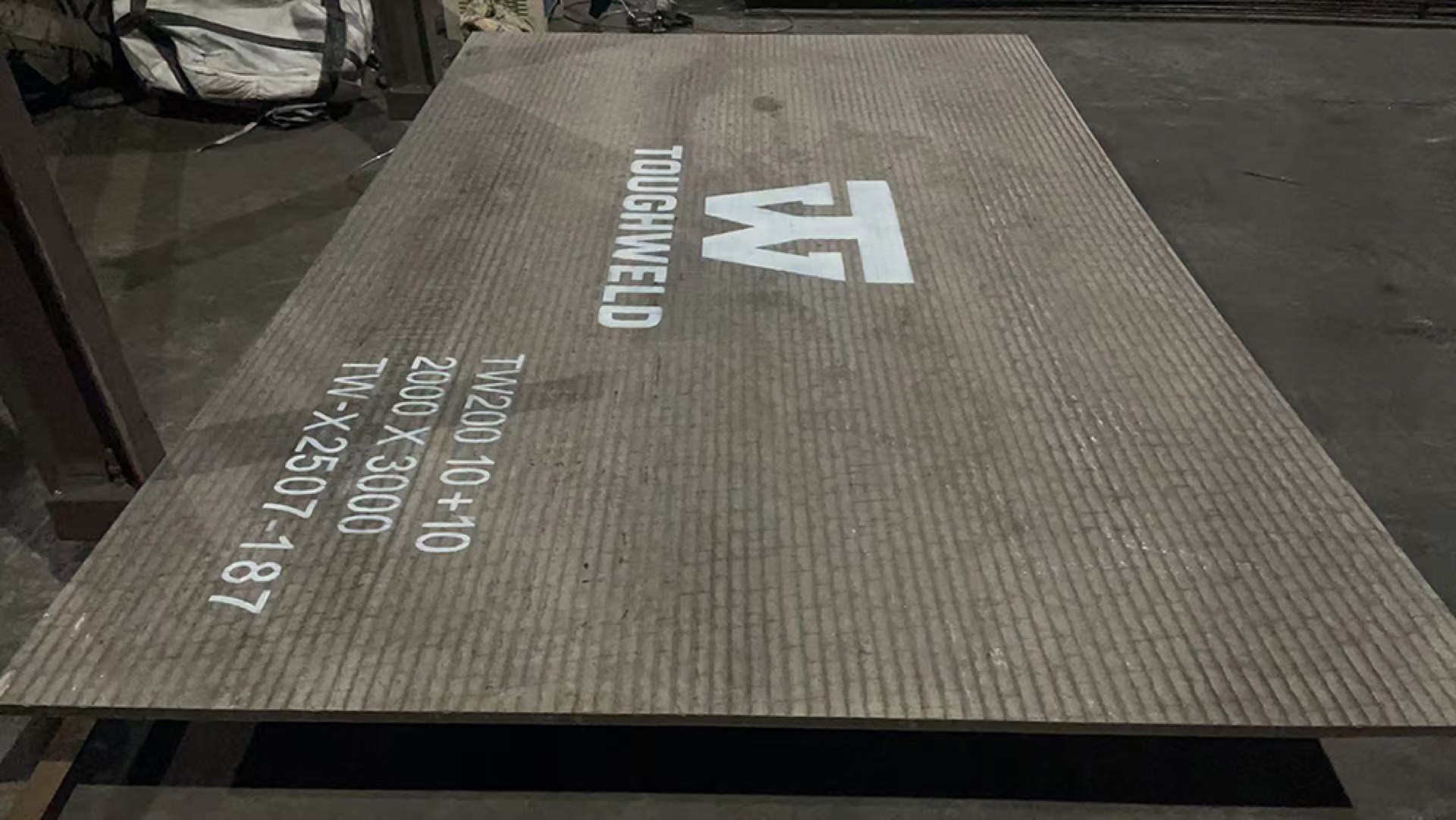
Chromium carbide overlay plate is a bimetallic sandwich: a weldable, formable mild-steel base and a wear layer of chromium-rich deposit fused onto it by open-arc welding. As the overlay solidifies, it forms Cr₇C₃ carbides: microscopic ceramic-hard needles that take the abrasion so the machine behind the plate doesn't.
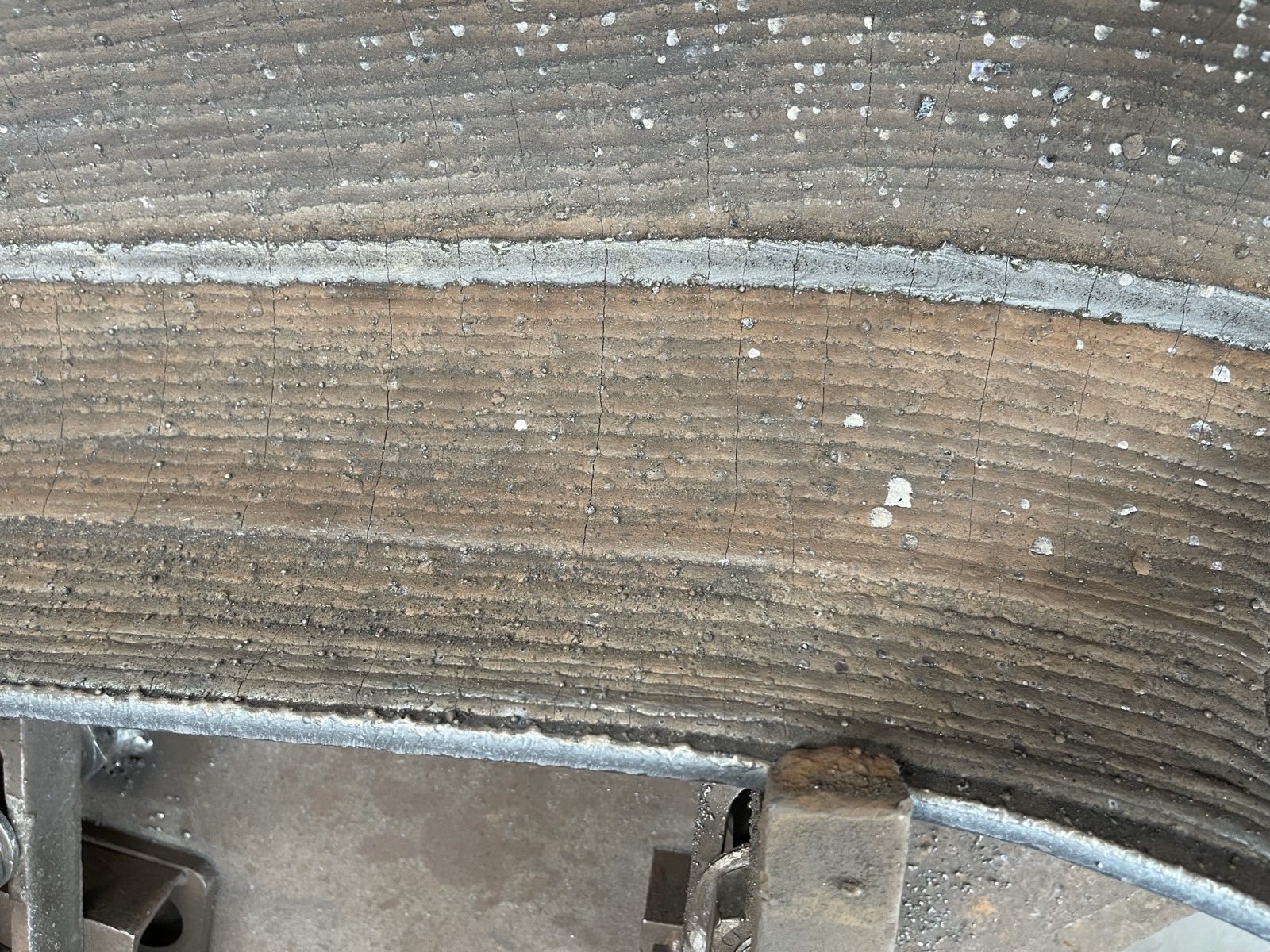
The fine crack network you see on the surface is not a defect. It is stress-relief checking, a signature of every properly welded chromium carbide overlay.
TW200. The workhorse.
Our standard chromium carbide overlay plate for severe sliding abrasion: chutes, hoppers, screens, truck beds, fan housings and everything else that sand, ore, clinker and scrap eat first.
| Property | Value |
|---|---|
| Standard combinations (base + overlay) | 3+3 · 4+4 · 5+5 · 6+4 · 6+6 · 8+7 · 10+10 · 10+20 · 16+20 mm (others on request) |
| Overlay hardness | 58–64 HRC (multi-pass; SGS-measured 61.7–64.0) · 54–58 HRC (single-pass, e.g. 3+3) |
| Deposit type | Chromium carbide deposit (Cr₇C₃), typical C 3.5–5 %, Cr 25–40 % |
| Standard sheet sizes | 1000 × 1000 · 1000 × 3000 · 1524 × 3048 · 2000 × 3000 mm |
| Service temperature | up to 350 °C continuous (higher-temperature grades on request) |
| Overlay tolerance | overlay thickness within ±10 % |
| Base plate | Weldable mild steel (Q235/S235-class) |
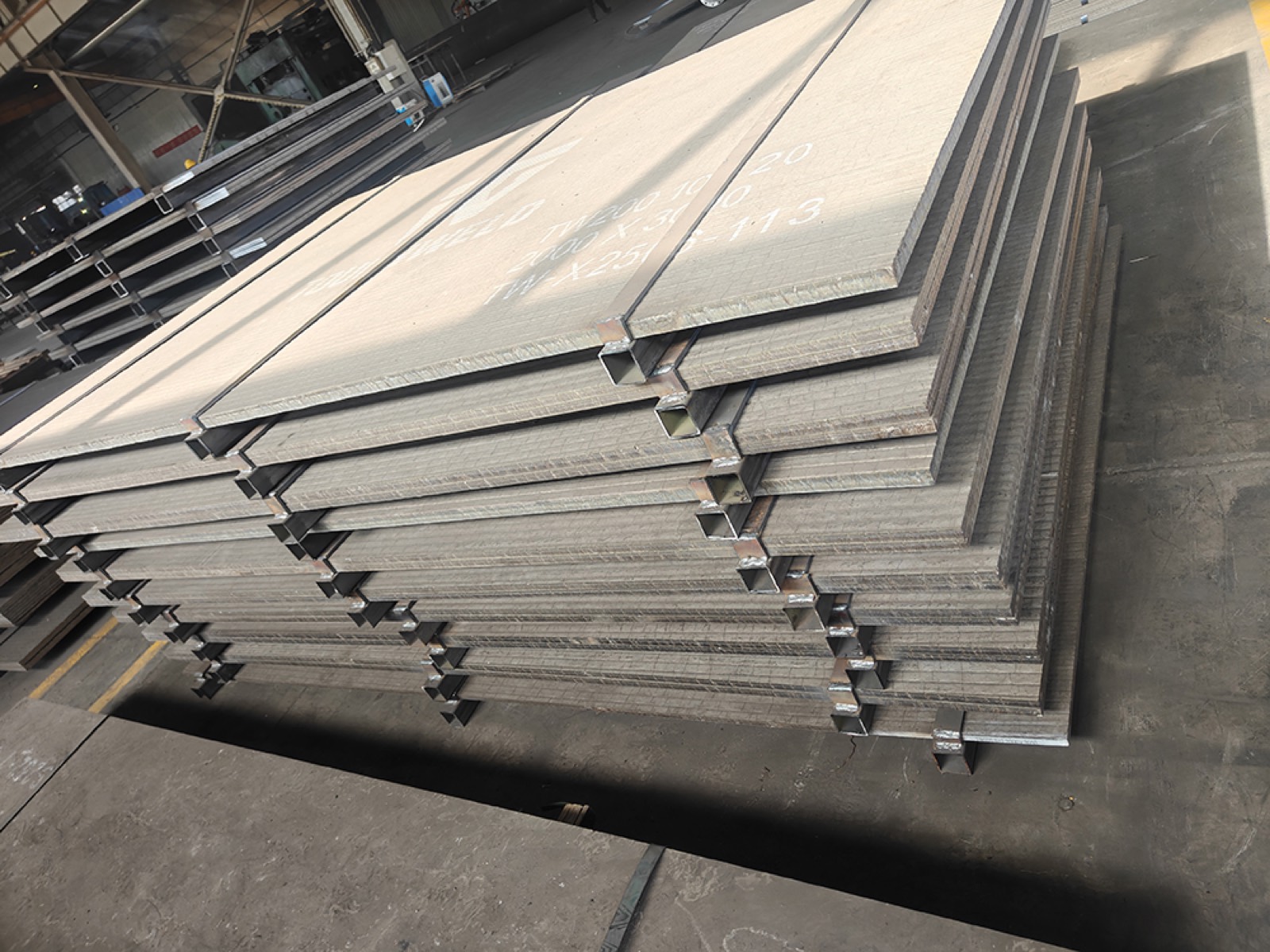
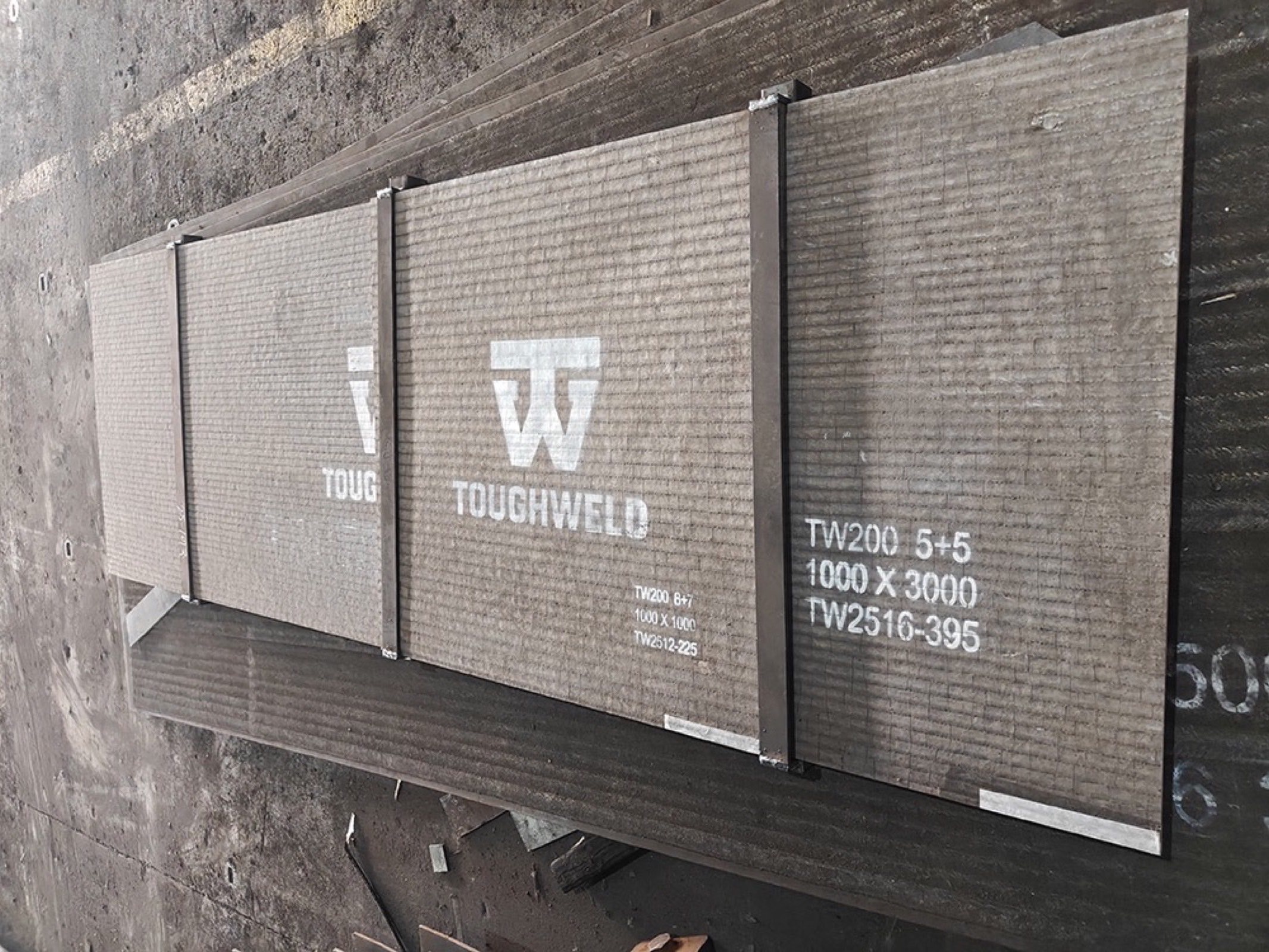
| Marking | Every sheet stencilled with grade, combination, size and batch number |
Typical values for the standard program. Exact figures for your combination are stated on the order documentation; EN 10204 3.1 material certificates available on request.
Independently tested. Numbers published.
TW200 overlay material has been tested by SGS (Shanghai): chemistry, hardness and metallography. The certificates stay on file and are available on request. The numbers stand here, in public.
| Overlay | Hardness, weld layer | C | Cr | Primary carbides | Total carbides |
|---|---|---|---|---|---|
| 6 mm | avg 62.4 HRC (61.7–63.0) | 4.65 % | 34.0 % | ~52 % | ~67 % |
| 10 mm | avg 63.1 HRC (62.6–63.7) | 4.84 % | 35.7 % | ~60 % | ~72 % |
| 12 mm | avg 63.4 HRC (63.0–64.0) | 4.70 % | 39.7 % | ~62 % | ~81 % |
Measured on production plate samples, 5 hardness indentations per sample. Values are test results, not guaranteed minima. Figures for your batch are stated on the order documentation.
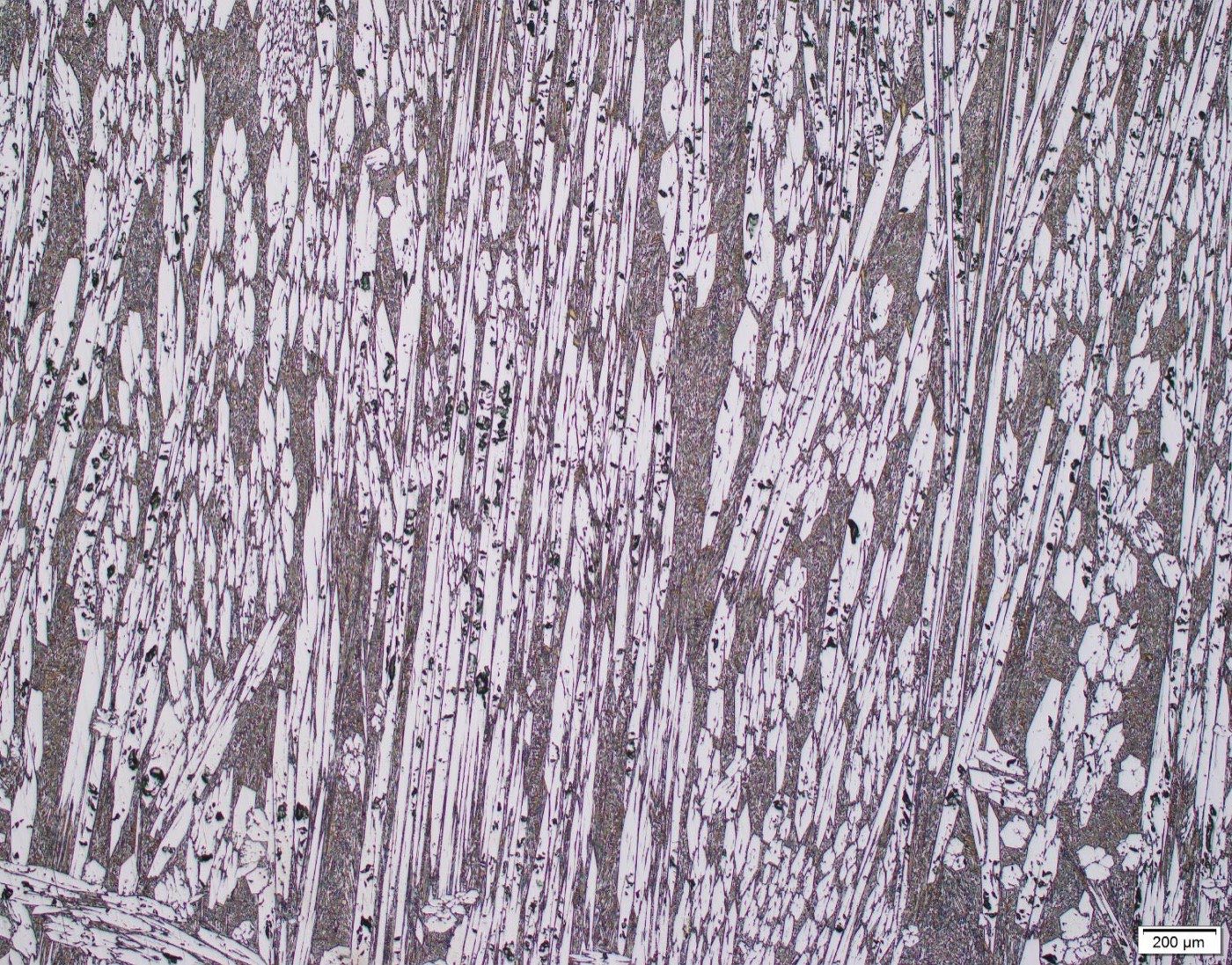
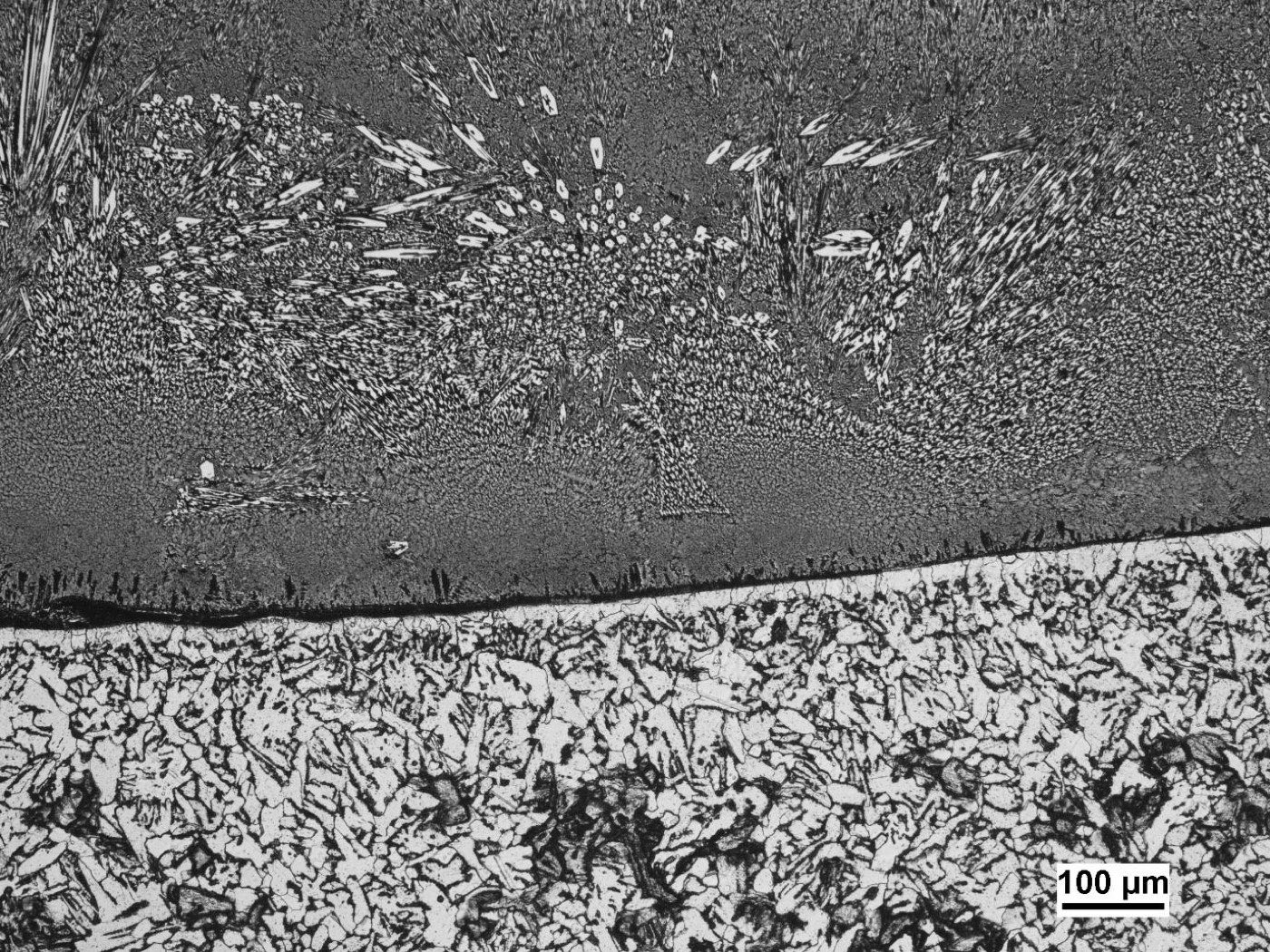
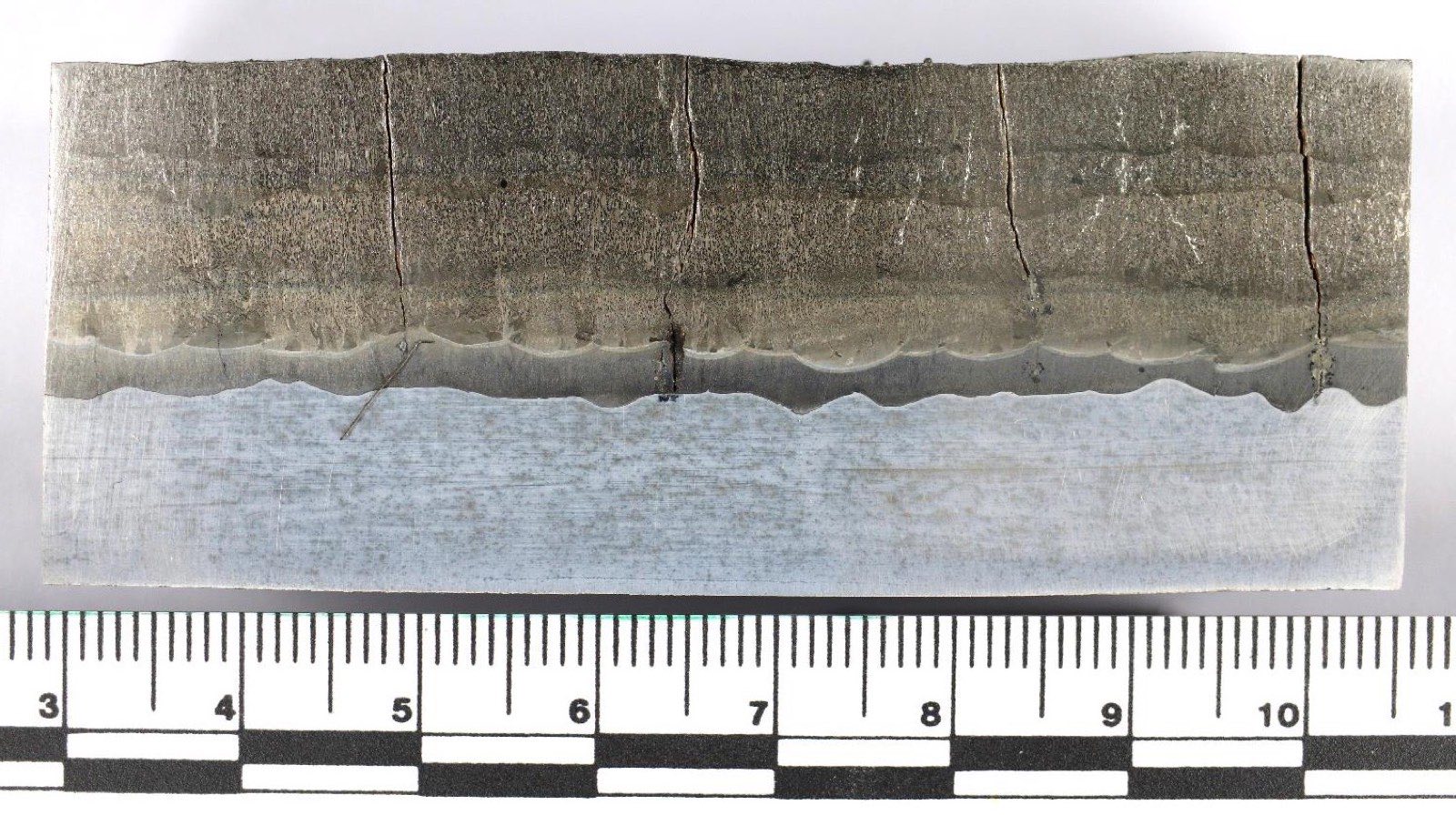
What the lab images tell an engineer
Carbide volume climbs with overlay thickness, from about 67 % total at 6 mm to about 81 % at 12 mm. Hardness follows: every multi-pass sample measured above 61.7 HRC. And the cross-section shows the check cracks doing exactly what they should: relieving stress in the overlay and stopping dead at the fusion line.
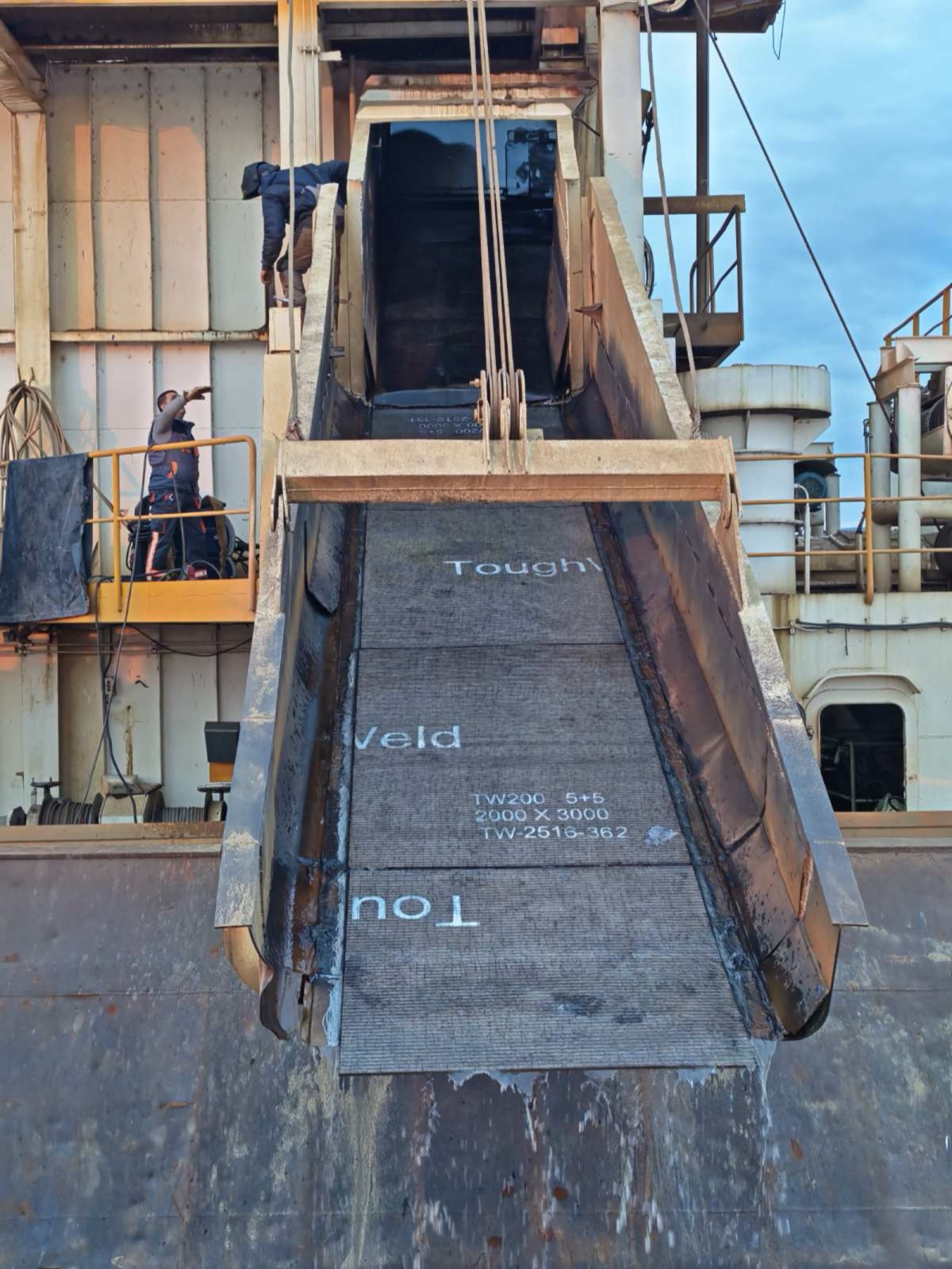
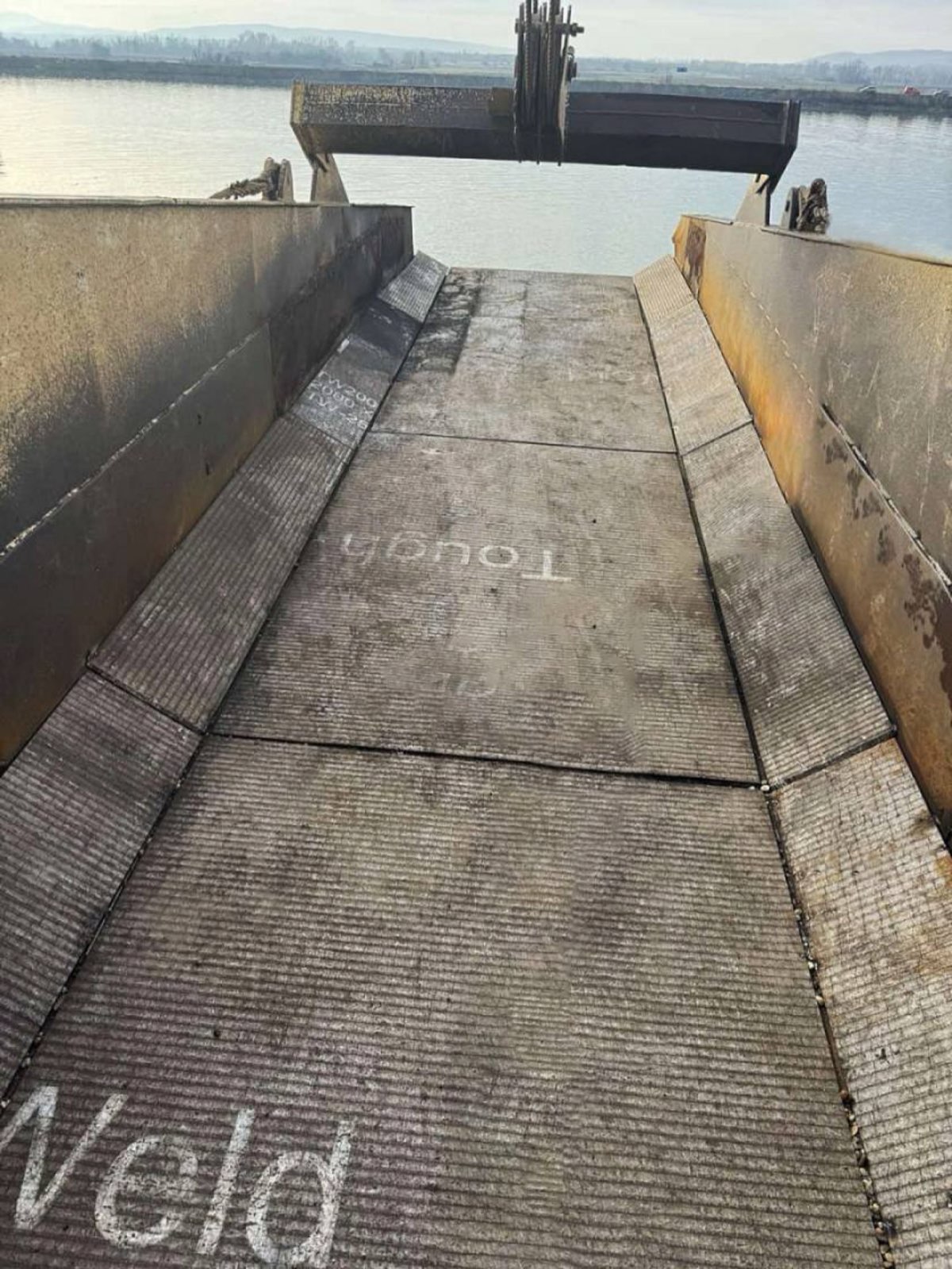
Already at work
Dredgers, barges, loaders and transfer chutes run on TW200 lining today. Stencils still visible.
TW-F. Fabricated to your drawing.
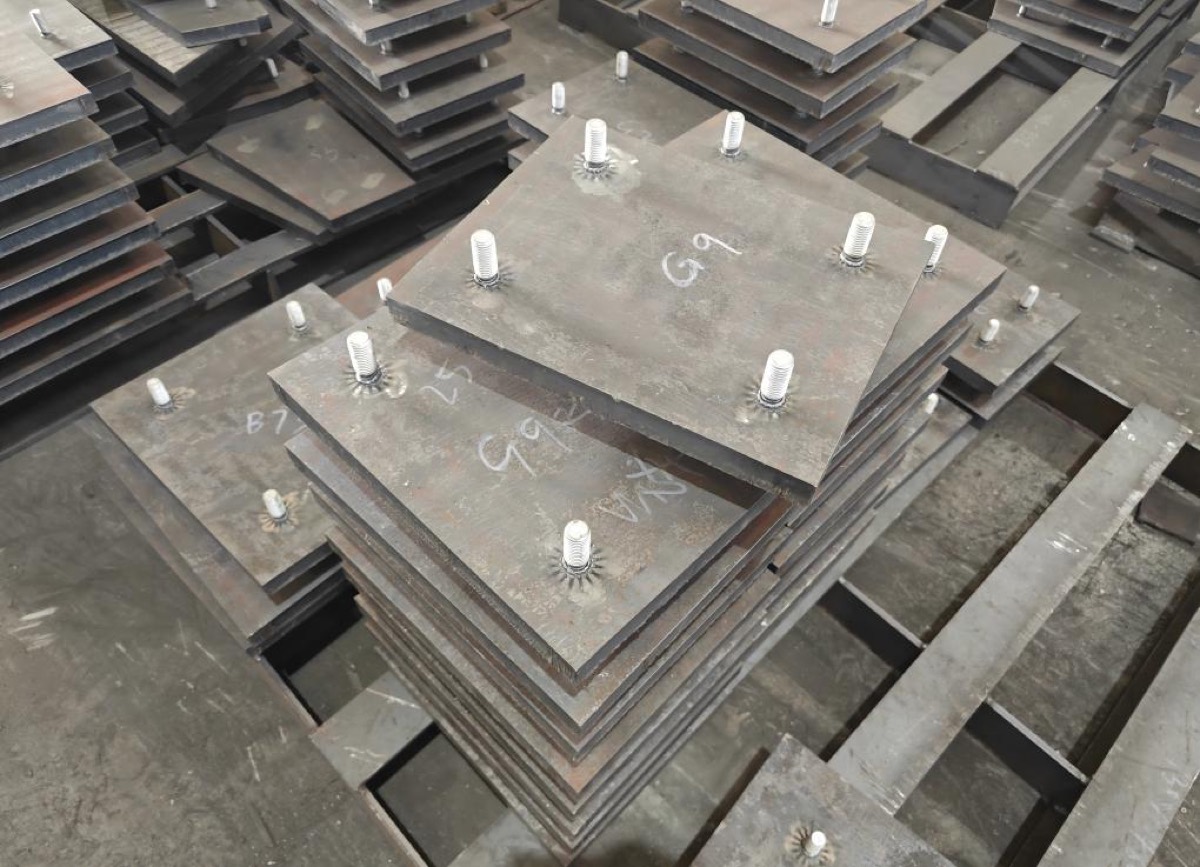
TW-F extends the TW200 program from flat sheets to finished parts: plates cut to shape, rolled, drilled and countersunk, delivered ready to bolt or weld into your equipment.
Plasma and waterjet cutting to your DXF, STEP or PDF drawings: rectangles, sectors, cones and free shapes.
Rolling and press-forming perpendicular to the bead direction: pipe shells, chute radii, cone segments.
Countersunk bolt holes, slotted holes and welded studs for fast liner mounting and replacement.
Processing guidance
- Cut by plasma or waterjet, never oxy-fuel
- Form perpendicular to the weld bead direction
- Weld base-to-base with austenitic (309-type) filler
- Fix by welded studs, countersunk bolts or plug welds
Plate questions, answered
What is chromium carbide overlay (CCO) plate?
A bimetallic product: a tough mild-steel base with a chromium-rich weld deposit fused on top. The overlay forms hard Cr₇C₃ carbides that resist sliding abrasion far longer than quenched wear steels, while the base stays weldable and formable.
Are the surface cracks a defect?
No. The hairline crack network (relief checking) is a normal signature of chromium carbide overlay. It relieves welding stresses and does not propagate into the base plate or reduce wear life.
Can CCO plate be cut, formed and welded?
Yes, from the base side. Plasma or waterjet for cutting, forming perpendicular to the beads, and 309-type filler for welding. Or skip the workshop time and order TW-F parts finished to your drawing.
CCO or AR500: which one do I need?
Severe sliding abrasion: CCO, which typically outlasts AR-grade steels several times over. Heavy impact with moderate abrasion: an AR steel may serve better. Send us the application and we'll tell you honestly which one to buy.
Get the TW200 numbers for your application.
Tell us the equipment, the abrasive and the current service life. We reply within 24 hours with a recommended combination and a firm offer.